Running Calculator
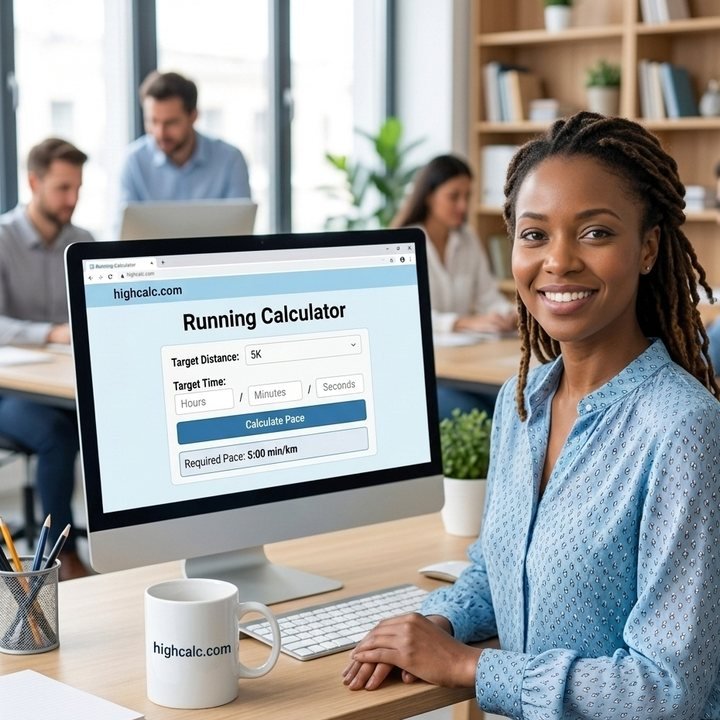
Running Calculator: Pace, Finish Time & Distance
A running calculator turns the three numbers every runner works with, distance, time and pace, into a plan you can follow. Enter any two of them and this free running calculator works out the third. It also shows your speed in km/h and mph, projected 5K, 10K, half marathon and marathon times, and a split table you can take out on the road. It works in kilometers or miles, so it suits road races, track sessions, treadmill runs and an easy weekend jog.
Quick answer: running a 5K in 25 minutes is a pace of 5:00 per km, which is 8:03 per mile and a speed of 12 km/h (7.46 mph). Held for longer races, that same pace gives a 10K in 50:00, a half marathon in 1:45:29 and a marathon in 3:30:59.
How Running Pace Works
Pace is the time it takes you to cover one kilometer or one mile. Runners prefer it to finish time because it stays the same whatever the race length, while finish time grows with distance. A pace of 5:00 per km means every kilometer takes five minutes. Speed describes the same effort the other way round, as distance covered per hour, which is why treadmills display km/h or mph. The calculator shows both, so you can move easily between a watch, a treadmill and a race plan.
Running Pace Formulas
The calculator uses three simple relationships between distance, time and pace. Whichever mode you choose, it rearranges the same formula.
One mile equals 1.609344 km, so a pace per mile is the pace per km multiplied by 1.609. The race distances used here are 5 km, 10 km, 21.0975 km for the half marathon and 42.195 km for the marathon.
Race Times at Common Paces
This table shows what several steady paces add up to over the standard race distances. Use it as a quick check for a goal time, or enter your own numbers above for an exact result.
| Pace | 5K | 10K | Half marathon | Marathon |
|---|---|---|---|---|
| 4:30 /km (7:15 /mi) | 22:30 | 45:00 | 1:34:56 | 3:09:53 |
| 5:00 /km (8:03 /mi) | 25:00 | 50:00 | 1:45:29 | 3:30:59 |
| 5:30 /km (8:51 /mi) | 27:30 | 55:00 | 1:56:02 | 3:52:04 |
| 6:00 /km (9:39 /mi) | 30:00 | 1:00:00 | 2:06:35 | 4:13:10 |
| 6:30 /km (10:28 /mi) | 32:30 | 1:05:00 | 2:17:08 | 4:34:16 |
| 7:00 /km (11:16 /mi) | 35:00 | 1:10:00 | 2:27:41 | 4:55:22 |
| 7:30 /km (12:04 /mi) | 37:30 | 1:15:00 | 2:38:14 | 5:16:28 |
Using Your Results in Training
Most of a runner's weekly mileage is run at an easy effort, and a common guide is to run these sessions 60 to 90 seconds per km slower than goal race pace. The calculator turns that rule into an easy-run range for your result. The splits table lists the elapsed time at each kilometer or mile, which makes it simple to check a watch during a race. To estimate the energy a run uses, try the calories burned calculator, and if you only need pace for a single distance, the pace calculator is a quicker option. Remember to drink enough on longer runs, and the water intake calculator can help you plan.
Limits of Running Predictions
Predicted times assume you hold one pace from start to finish. Hills, heat, wind, fatigue and race-day nerves all change that, and the longer the distance, the more it matters. A runner who can hold 5:00 per km for 5K will usually need a slower pace for a marathon. Use the numbers as a guide for goal setting, increase your distance gradually, and talk to a doctor before starting a new running program if you have any health concerns.
Who Can Use This Calculator?
Beginners planning a first 5K, club runners chasing a personal best, marathon and half marathon trainees, coaches building pacing plans, treadmill users converting speed to pace, walkers and hikers, and anyone who wants a fast way to switch between kilometers and miles.
How to Use This Running Calculator
Choose what to calculate
Pick Pace, Finish Time or Distance. The field you are solving for is hidden.
Select kilometers or miles
The unit applies to distance and pace, and your values convert when you switch.
Enter your numbers
Type values, choose a race distance such as 5K or Marathon, or drag the sliders.
Read your results
See pace, speed, race predictions and an easy-run range, then open the splits table.